Sunday, 1 March 2020

Expert Lectures on ELT - Prof. Atanu Bhattacharya
The English language teaching tradition has been subject to tremendous change, especially throughout the twentieth century. Perhaps more than any other discipline, this tradition has been practiced, in various adaptations, in language classrooms all around the world for centuries. While the teaching of Maths or Physics, that is, the methodology of teaching Maths or Physics, has, to a greater or lesser extent, remained the same, this is hardly the case with English or language teaching in general. As will become evident in this short paper, there are some milestones in the development of this tradition, which we will briefly touch upon, in an attempt to reveal the importance of research in the selection and implementation of the optimal methods and techniques for language teaching and learning.
- The Classical Method
- The Direct Method
- The Audiolingual Method
- Suggestopedia
- The Silent Way
- Strategies - based Instruction
- Communicative Language Teaching
Teaching language through Literature:
Poetry:
Teaching language through literature Poetry can pave the way for the learning and teaching of basic language skills. And it is metaphor that is the most prominent connection between learning and poetry. And because most poetry consciously or unconsciously makes use of metaphor as one of its primary methods, poetry offers a significant learning process. There are at least two learning benefits that can be derived from studying poetry. First is that the appreciation of the writer’s composition process, which students gain by studying poems by components. And second is that Developing sensitivity for words and discoveries that may later grow into a deeper interest and greater analytical ability. But some other benefits of poetry is the educational.
1) provides readers with a different viewpoint towards language use by going beyond the
2) known usages and rules of grammar, syntax and vocabulary,
3) triggers unmotivated readers owing to being so open to explorations and different interpretations,
4) evokes feelings and thoughts in heart and in mind,
5) Makes students familiar with figures of speech due to their being a part of daily language use. Example of simile, metaphor, irony, personification, imagery, etc.
Thus, poetry is a rewarding and enjoyable experience with the properties of rhyming and rhythm both of which convey “love and appreciation for the sound and power of language.” At this juncture, it can be stated that students become familiar with the suprasegmental aspects of the target language, such as stress, pitch, juncture, intonation by studying poetry.
The Function of Criticism - T. S. Eliot
This essay is an outcome of the controversy that was created in the year 1919. It is actually an answer to Murray’s essay on Eliot’s essay of “Romanticism and Tradition”. This essay is reply to the essay written by Murray.
In this essay Eliot showcases the close relationship between the present and past in the world literature. One cannot say that which of them is superior. Both of them are dependent and yet independent. According to Eliot criticism is the analysis of the works of literary nature, criticism always has to be about something and its goal is to give proper explanation of all the literary text. Sometimes critics differ from each other because they have their personal biases. According to Eliot all critics should cooperate in order to critics a particular text. The aim and the method of the criticism of the work it should be according to the nature of the work.
The Second part of this essay talks about Murray’s views on Classicism and Romanticism according to Murray a classical writer cannot be a romantic writer and a romantic writer cannot be the classical writer. But Eliot not believes in this statement that English people are only romantic and French are classical.
Moreover, he discusses the problems in criticism and goes against the views of Matthew Arnold who differentiated between critical writing and creative writing. Both of them are equally important and critic in order to a criticize other and sometime they are capable to criticize their own work also.
Afterward Eliot differentiated two rates of artists:

First rate of artists are those who sacrifice and also surrender themselves in order to get meaning of the text.
Whereas the second rate artist does not believe in this and works in a completely opposite direction.
In the third part Eliot completely goes against the views of Murray as it is all about the discovery some common principles in order to achieve the perfection in art. The perfect artists are those who kept both the past and the present with them and go on writing. The artist who believe in inner voice only are not aware about the tradition, the wisdoms and the experiences of the past which can be extremely advantageous.
The forth part of this essay is about there is no difference between a critical writer and creative writer, they are almost same. Moreover the highest level of the criticism done by those who criticize their own work. Eliot also talks about the facts and figure of ideal critics:
$ To be an ideal critic, one has to develop an extraordinary sense of facts about the work of art, the conditions, the setting and the mannerisms.
$ Any critic has to be good in comparison and analysis about the theme, the plot and the technical aspects like the structure and the content all of them should be taken together in order to interpret.
$ Facts are not always beneficial because they can sometimes mislead. Fact should be in close connection to what you are writing upon.
$ A good critic has to be extremely objective in nature and should have a scientific attitude by following all the above mention points.
Conclusion:
In short, Eliot strongly believes in the concept of individuality and originality but he does not neglect the importance of tradition. He respects those critics who criticize the works with the idea of “PASTNESS OF THE PAST” in their mind.
Concept of Imagination by I.A. Richards
INTRODUCTION
literary Criticism has found itself as an important and independent branch. In the modern times, Literary Criticism has established new horizon. I. A Richards and T. S. Eliot are considered as The Father of New Criticism.

Simple means of IMAGINATION :
The faculty or action of forming new ideas, or images or concepts of external objects not present to the senses.
According to I. A Richards, we can define the term Imagination at least in six distinct sense. He discusses Various meaning and concepts of the same term. Since Imagination is an abstract noun, it can be defined in many different ways.
1) The first concept of IMAGINATION is very common that is the production of vivid images, usually visual images, already sufficiently discussed. It is the commonest and the least interesting things which is referred to by Imagination.
2) Another concept of IMAGINATION is the use of figurative language. People who naturally employ Metaphor and simile especially when it is of an unusual kind are said to have Imagination.
3)The Third is, a narrator Sense is that in which Sympathetic reproducing of other people 's states of mind, particularly their emotional states is Imagination.
4)Moreover, a different concept of IMAGINATION is the inventiveness the bringing together of elements which are not ordinary connected.
5)Fifth concept According to I. A Richards is that Imagination means a kind of relevant connection of things ordinary thought as disparate which is exemplified in scientific Imagination. The technical triumphs of The Arts are examples of this kind of Imagination.
6)Finally, we come to the sense of Imagination with which we are here most concerned. It is closely connected with Coleridge 's great Contribution to Critical Theory.
In this words Imagination means......
"That Synthetic and magical power,
to which we have exclusively appropriated
the name of Imagination....... "
It is a sense of novelty and freshness with Old and familiar objects, a more than usual state of emotion, with more than usual order.
At the end of the article, I. A Richards refers Wordsworth 's pantheistic interpretations of the imaginative experience, in' Tintern Abbey ', which is in verifying form has been given by many poets and critics.
Imagination plays very vital role in creation of literature.
Fame and Friendship by H.A. Dobson
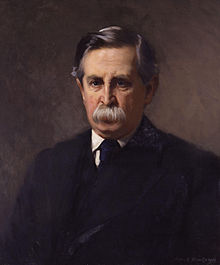
Fame and Friendship is written by H.A. Dobson. Here poet wants to convey that fame is not as good as friendship. Fame is immortal and friendship is mortal. If we compare first stanza with second stanza we know that poet shown the reality of life.
First stanza,
“Fame is a food that dead men eat,
I have no stomach for such meat.”
Above lines speaks about that there is no value of fame in our life because fame is like a food that dead men eat. Why poet compare fame with dead men? Because one day fame will die with the person.
Second stanza,
“But Friendship is a nobler thing,
Of Friendship it is good to sing.”
Friendship is connects one person to the other. So many ideas, thoughts, feelings, emotions share by friendship and it is the bridge that connects our relations. At the end men will die but their sweet memories always lives. It is the experience of recall and past and through it friendship always lives. Friendship is a nobler thing because it proves healthy relationship and it includes care for others. One day friend will die but memories of her/him always lives with us.
Subscribe to:
Posts (Atom)